Breaking Down Regenerative Braking
Carbon emissions are a hot button topic, due to the accelerating pace of global warming. One of the places we need to reverse carbon emissions from is cars. New automotive technologies have been introduced, such as hybrid and electric engines, to combat emissions. Within hybrid and electric cars, there is also a prominent form of braking: regenerative braking. It is an incredibly useful technology, which will be around for years to come.
What Is Regenerative Braking? | News | Cars.com
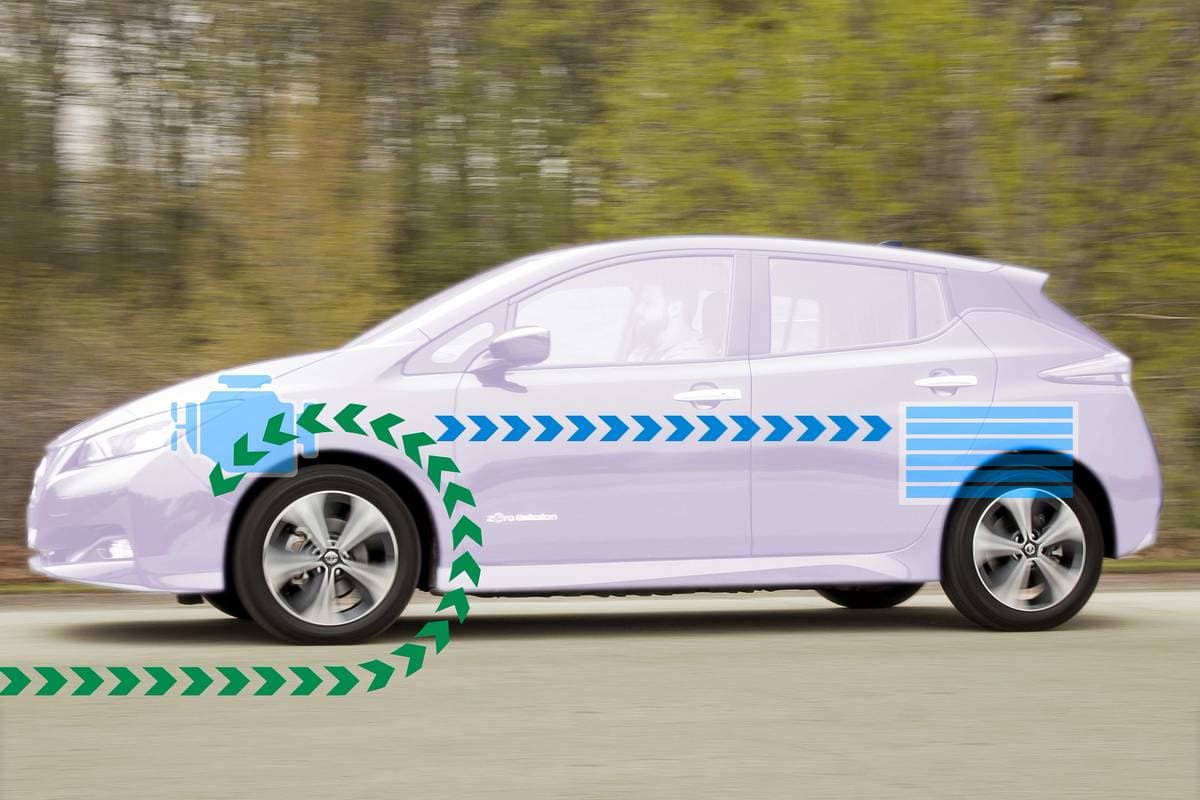
Regenerative braking takes advantage of kinetic energy, rather than solely relying on the friction braking of mechanical systems. Specifically, as an electric or hybrid car brakes, regenerative braking sends the car wheels’ rotational motion into its electrical motors. The electrical motors are reversed, thus acting as a miniature electrical generator and adding energy back into the car. Mechanical braking rotors are not used in these systems until the very last moments of braking.
While its surge in usage is new, regenerative braking is a concept that has been around for over a hundred years, in things like trolleys, trains, and electric cars (1). These systems make up a good portion of the energy efficiency of electric and hybrid cars, by saving the heat energy that a mechanical braking system would otherwise take. It is estimated that 70% of a car’s kinetic energy is recaptured from regenerative braking. In hybrid cars, this can lead to a 25-45% reduction in fuel usage. As time has progressed, regenerative braking systems have also become smoother than mechanical braking systems. The electrical motors of hybrid and electric cars are controlled by a series of circuits, which monitor a car’s rotational motion to bring it to a smooth stop (3). A final advantage of regenerative braking systems is that they do not wear out as quickly. This is since, rather than relying on the brute friction of brake rotors for stopping, regenerative brakes are redirecting motion into stopping energy.
Ingenious as classical mechanical braking systems are, regenerative braking systems are a step above. Their large energy savings, smoothness of use, and enhanced durability make them vastly superior to pure mechanical systems. While mechanical braking systems will remain a common component to gasoline cars, electrical and hybrid cars are becoming more commonplace. As this trend continues, regenerative braking is likely to become an industry standard.
By: Christian Mueth
Sources:
What Is Regenerative Braking? | U.S. News & World Report
What Is Regenerative Braking? | News | Cars.com
How Regenerative Braking Works | HowStuffWorks