Hydroelectric Dams
With the spiraling state of the world’s climate, renewable energy resources are a must. One of the biggest producers of renewable energy today are hydroelectric dams. However, the specifics of their mechanisms are lost to many. Moreover, while hydroelectric dams have their benefits, there are also drawbacks that are often overlooked. Exploring the details of hydroelectric dams is intriguing, and well worth it.
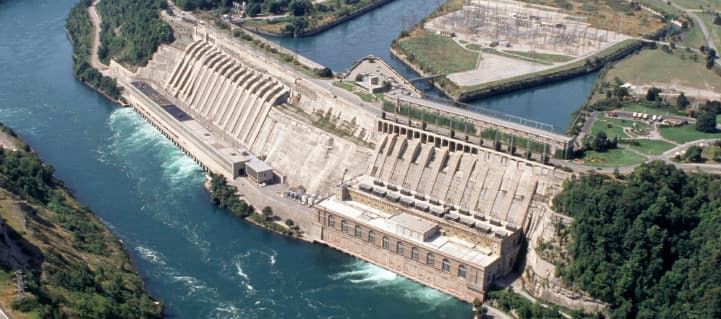
OPG completes rehab of reservoir at 174-MW Sir Adam Beck Pump Generating Station - Hydro Review
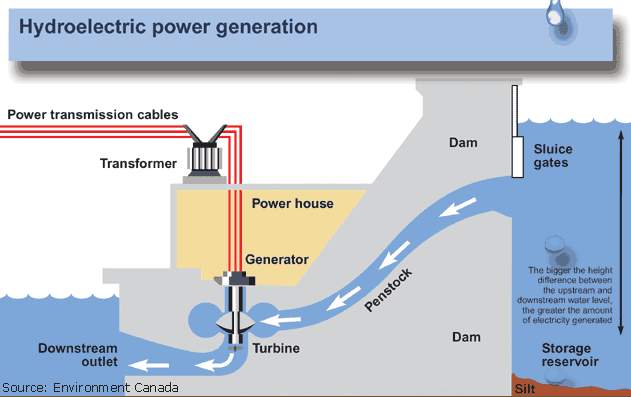
At their core, hydroelectric dams take energy from the flow of a body of water, and convert it into electricity. However, a key condition is that the body of water sees a large drop in elevation. This is because hydroelectric dams depend on the potential energy from gravity that water holds. There are also several stages to the energy production process. First, water from the body of water gets stored in a large reservoir. Following this, water is let through a gate called a “sluice gate” (1). It then falls through a channel called a “penstock”, and its kinetic energy is used to turn a generator. The generator produces this electrical energy by generating an electrical field, from its magnetic copper coils. The electrical energy is finally sent from the generator to a transformer, which sends the electricity to the electrical grid, and to the wider populous. Meanwhile, all the water that passes through the generator is released to the downstream.
Hydroelectric Power: How it Works (usgs.gov)
One of the big advantages of hydroelectric dams is that they are amazing at giving big bursts of electricity when there is high demand. This is because they can store water in their reservoir, and release to generate electricity as needed. Its function is like that of a massive battery (1). An example of when quick power generation might be of use would be during a massive summer heatwave. Additionally, they’re incredibly efficient, accounting for 20% of the world’s energy production (3). The efficiency of a hydroelectric plant is defined by its flow and head (2). Flow is the amount of water that flows through the generator. Head is the distance that the water will drop before hitting the generator and is where the bulk of the kinetic energy comes from. Because of these two factors, the electricity that hydroelectric dams produce gives less emissions and is substantially cheaper than that of, say, thermal power plants (3).
The biggest drawback of hydroelectric dams is that they impose massive changes on the surrounding ecosystem. Populations of fish and surrounding fauna often are driven away or reduced in number. Citizens living near the construction sites of hydroelectric dams are also often forced to relocate. Furthermore, while hydroelectric dams give less emissions than other forms of power plants, they still release methane into the atmosphere, due to the standing body of water that they hold in their reservoir (2).
Limitations exist for the hydroelectric dam, decreasing their prevalence. Nevertheless, where they are successful, they provide massive benefits. Hydroelectric dams may be a complicated technology, but it is their complexity that contributes to the simple conveniences of modern society.
Sources:
Hydroelectric Power: How it Works (usgs.gov)
How HydroPower Plants / Dams Work - Working Mechanism of Hydropower Projects (aboutcivil.org)
Brief Introduction to Hydroelectric Dams: How They Work, Advantages & Disadvantages - Bright Hub Engineering