Unpacking Jet-Packs
Flight technology is one of the greatest achievements of humanity. Nevertheless, no technology is ever finished. Jetpacks that allow people to journey through the sky have long been a dream of inventors. Thus, jetpack technologies are in constant development. It is quite possible that jetpacks will one day be used by emergency response teams and military personnel. Though, there are fundamental issues with jetpack technologies, which have yet to be overcome.
The fundamental way in which most jetpacks work is by using fuel to generate thrust, via jet engines. This requires implementation of heavy-duty jet fuel and jet engines, which are also compact (for more about how jet engines work, see here). They also have on-board engine computers, which are used to optimize flight control and stabilization. Unfortunately, due to the limited energy density of jet fuel, jetpacks are generally optimized between a half a minute and a minute of flight time (1). Jet-packs are excellent at achieving massive heights, in short spans of time, but they are unable to sustain their heights.
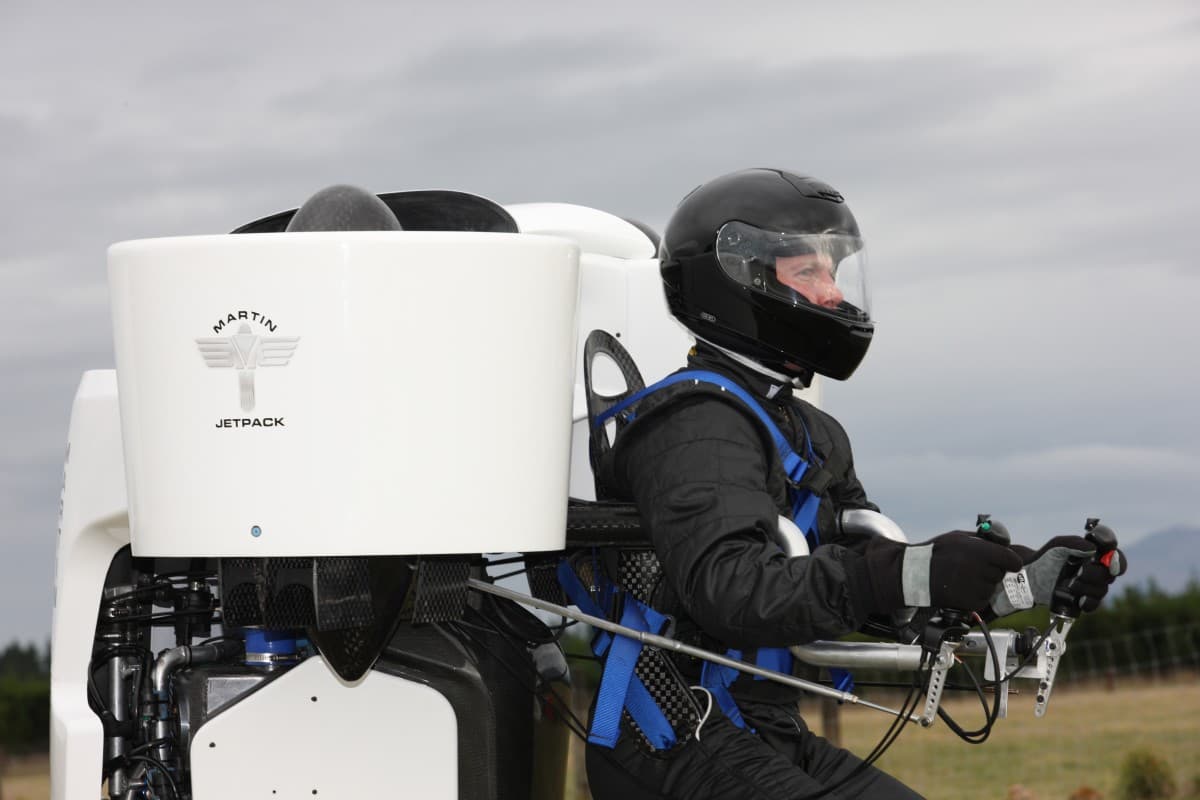
The Martin Jetpack (newatlas.com)
Despite the limitations of conventional jetpack technologies, ducted fan technologies have been tested and have proven more viable. Martin Aircraft, which has since gone under, produced a flight pack from a petrol engine and ducted fans. It was capable of 30 minutes of flight time and achieving a height of over 8,000 feet (2). The primary flaw in the company was that they initially claimed they would sell their technology to private consumers, at a cost of $86,000. It is likely that, if they had been consistent in their business model and sought investment from military contractors, they would still be around today.
Outside of using petrol engines to power ducted fans, there are theoretical also talks of using electric brushless motors. In simple terms, these would be ducted drone propellers that could be worn around the human body. Currently, there is a limitation from doing this, due to power constraints caused by the density of lithium-ion batteries. Though, advancements in battery technology would quickly change this. Thankfully, the military and private industry alike are desperate to find such a miracle battery.
Concerning the future of conventional jetpack, advancements are still being made. Companies like Gravity Industries and JetPack Aviation are each private companies that also are currently pushing the edges of jetpack technology.
Due humans being inherently flightless, the challenge of producing an efficient jetpack is immense. Despite this, jetpacks do exist, and they are becoming better by the year. It is quite likely that, in the not-too-distant future, we will see battery technology give rise to jetpacks in much the same way that battery advancements gave rise to the electric car. Just, don’t expect to ever see your neighbor flying one of them.
Sources:
The world’s top jetpack concepts (aerospace-technology.com)
The Martin Jetpack (newatlas.com)