Voting Machines: The Electronics Behind Elections
In the United States, another historic election has occurred. As such, there are many who have questions as to how our vote counting process operates. Specifically, people are turning a critical eye toward voting machines. There are questions regarding their reliability and security. Moreover, there is the larger looming question of what is going on underneath the hoods of our voting machines. Hopefully, in explaining how voting machines work, it can be better understood why they work.
(3)
Older voting machines were purely mechanical. Some worked by reading voter punch cards (1), whereas others worked by the pulling of a mechanical lever to indicate one’s vote (2). Today, most voting machines have followed in the footsteps of punch cards, using paper ballots to count votes. The reason for this has everything to do with transparency and security. If a machine is to mechanically fail, have software error, or be hacked, votes can still be recovered and recounted. An example of this happened in 2006 in Pottawattamie County; after a major machine error, election officials managed to do a proper hand count (1).
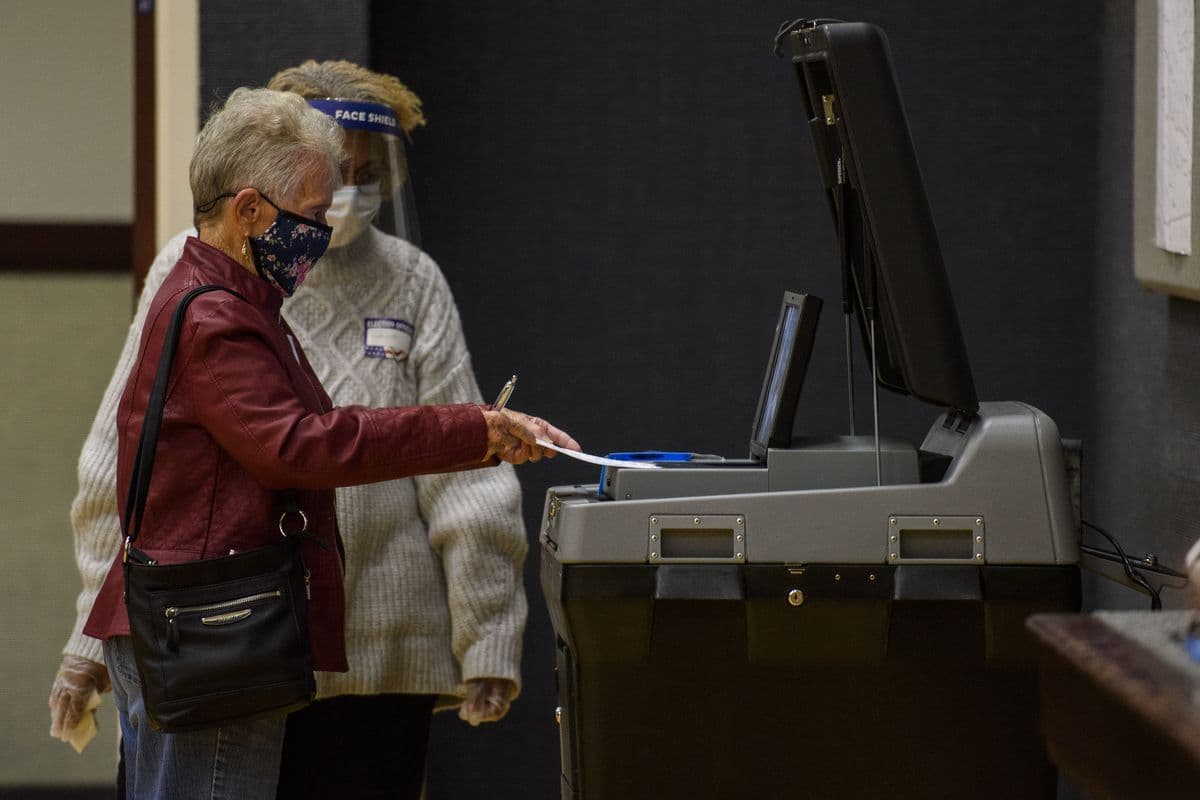
The way that modern voting machines read ballots is through digital imaging technology. With hand-marked ballots, when a voter fills out a bubble for a candidate and inserts it into a machine, the machine reads their filled in bubble. Following this, it will read a barcode on the side of a ballot, to work out the ballot’s coordinate map (3). Finally, it will use the ballot’s coordinate map to determine the bubble’s corresponding candidate and add it to the tally. In addition to hand-marked ballots, there are also machine marked ballots. A voter selects their candidate via touchscreen, and a prefilled ballot is printed out for them (3). Though, the following steps of the process work in much the same way as a hand-marked ballot. There is always a physical paper trail for the ballots, which can be reviewed.
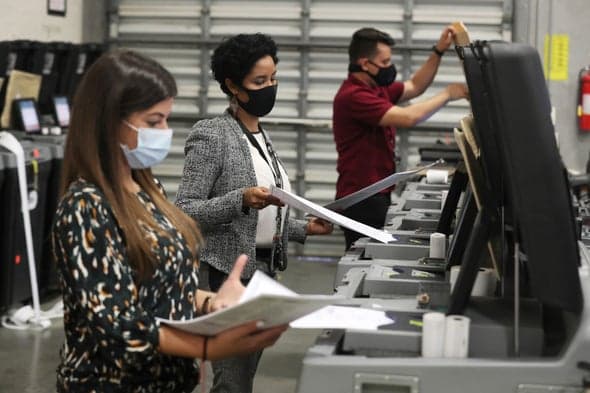
In addition to a robust digital imaging system, there are other methods used to increase the efficacy of voting machines. Some ballot counting machines are capable of counting 800 ballots per minute (1). There are also automatic envelope openers and signature verification scanners for absentee ballots (1). Advancements have been made in voter registration systems, to keep better track of a voter’s proper ballot and precinct (2). Additionally, according to the political science professor Charles Stewart, “there’s a very large computer network that helps to aggregate all of those tallies, and to communicate them, at least unofficial tallies, to the press, to state election authorities” (2).
(1)
While voting machines are generally reliable, there are exceptions. One example would be “direct recording” machines; these machines use software to record what a voter enters on a touchscreen. There is no paper trail produced by these machines. The problem with this form of voting is that one must trust the software to reliably record what a voter puts in; once a vote is in, it is “impossible to audit” (1). It is estimated that 5% to 10% of voters use these machines (2). While they are being phased out in many places, and malfunctions are rare, they remain a potential issue for many voters.
Despite fears of cyberattacks and are rampant, they are unfounded. According to Mark Lindeman, co-director of verified voting, the biggest threats aren’t so much hackers as they are machine and human error. In his words, “To my knowledge, there is no verified report of a machine being hacked during an election. Definitely verified reports of machines malfunctioning, scanners being misprogrammed, etc., but nothing tying those to [a] cyberattack.”(4) The United States Homeland Security Secretary, Chad Wolf, echoes much the same thoughts, with “full confidence in the country’s voting infrastructure and no indications that it had been hacked” (4).
Every time there is an election, there is undoubtedly going to be doubt cast upon our voting process. Such doubt is to be expected and is even necessary. It is what keeps our election officials and voting system held accountable. Nevertheless, being able to have faith in our voting processes and voting technology is also important. Thankfully, on most counts, the process of counting votes appears to be fine and well.
Sources:
https://www.scientificamerican.com/article/an-expert-on-voting-machines-explains-how-they-work/
https://www.marketplace.org/2020/10/30/voting-technology-machines-paper-ballots-hanging-chads-hacking-voter-registration/
https://www.essvote.com/blog/our-technology/how-are-ballots-read/
https://www.vox.com/recode/2020/11/3/21548057/voting-machine-broken-2020-elections-hacking-cybersecurity